Online News
ECE R118 compliance for ECT conduits
Our ECT polyamide cable protection conduit is now compliant with European Regulation ECE R118 on the burning behaviour of materials used in motor vehicles.
This certification reflects our commitment to safety, reliability, and compliance in demanding transport and industrial environments.
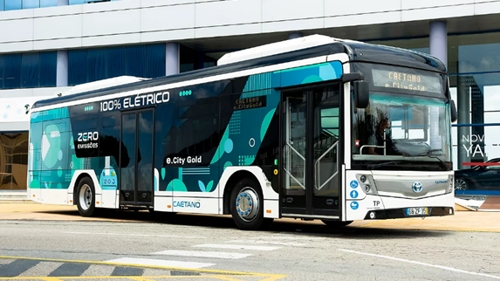
Designed to meet stringent fire-performance requirements, our ECT provides a dependable solution for applications where material behaviour under fire exposure is critical. An example would be its use on the passenger area of buses, where traveler’s safety is paramount. The halogen free formulation of our ECT and its low smoke emission make it an excellent choice for projects that require both technical performance and conformity with regulatory standards.
Key benefits of this conformity
-
Enhanced fire safety performance for sensitive applications.
-
Greater compliance confidence for OEMs, integrators, and installers.
-
Suitable for use in regulated transport and vehicle environments.
-
Supports specification in projects where certified flame behaviour is required.
-
Reinforces the quality and reliability of the installed system.
Typical areas of installation.
Thanks to compliance with Regulation No. 118, these conduits are suitable for installation in vehicle and transport applications where burning behaviour standards apply. They are especially well suited for wiring protection systems and other technical installations requiring certified materials for safety-critical environments.
Main characteristics of ECT
The ECT is one of the most versatile conduit models in our Nylofix range. It’s light and very flexible while keeping good mechanical characteristics.
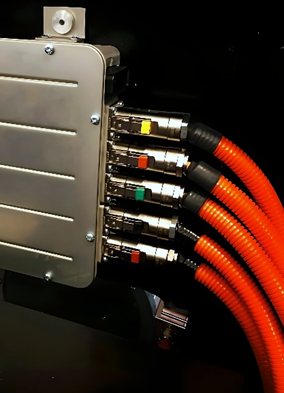
It’s available in dark grey, black and orange colour. The last one is used to mark high-voltage electrical systems so technicians and emergency responders can spot them immediately, especially on EV and hybrid vehicles.
The product is compliant with the IEC 61386 standard for flexible conduits and also has UL Recognition for USA and Canada.
The slit versions of ECT (ECT/C) are also compliant with ECE R118.
About ECE R118 Regulation
UN Regulation No. 118 (ECE R118) establishes mandatory technical requirements for the burning behaviour, melting, and fuel/lubricant repellence of materials used in the interior, engine compartments, and separate heating compartments of certain motor vehicles. It primarily targets Category M3 vehicles (buses and coaches, Classes II and III). Compliance involves passing specific tests (Annexes 6–8) to ensure safety in the event of a fire.
Key Requirements & Scope
-
Target Vehicles: Primarily M3 vehicles (large passenger vehicles with more than 8 seats and mass > 5 tonnes), specifically Classes II and III.
-
Material Testing: Materials used in interior construction (seats, panels, floor coverings, curtains, etc.) must be tested for horizontal/vertical burning rates and melting behaviour.
-
Engine/Heater Compartments: Insulation materials in these areas are also subject to testing to prevent fire spread.
-
Fuel/Lubricant Repellency: Materials must demonstrate an ability to repel fluids that could otherwise catch fire.
In short, our ECT polyamide conduit combines technical reliability with regulatory assurance, offering a trusted solution for modern industrial and transport applications.


